Adler Law Group, LLC Attorneys at Law

Blog / Car Accidents

Drive safely in snow and ice this season

On Behalf of Adler Law Group, LLC

Serious snowstorms significantly increase the risk of auto accidents. If you need to travel on Connecticut highways with snow and ice in the forecast, safe strategies can help lower this risk so you reach your destination safely.

Review these snow and ice driving tips as winter weather approaches.

Prep your vehicle

Before you set out, make sure your car has plenty of gas. Check the heater, windshield wiper fluid, brake fluid, and headlights. Replace your tires if they do not have enough tread. If necessary, clear snow off all the surfaces of your vehicle. Pack a flashlight, shovel, sand, and flares in case you get stuck.

Plan your trip

While you might consider taking back roads to avoid other vehicles, these routes are less likely to be clear. Stick to main roads since the state plows these first.

Instead, try to time your trip so you do not have to travel during rush hour. If you have to go to work, ask your employer about flexible hours. No matter where you have to go, give yourself plenty of time to get there.

Know how to react

If your car slides on ice or another slippery surface, do not brake hard, as this can cause you to lose control of the vehicle. Take your foot off the accelerator and the brake, letting your car “drift” through the icy area. When you need to stop, leave plenty of space and use a slow, steady pressure.

If you or a loved one experiences a serious auto accident injury, you can pursue legal compensation if another driver’s actions caused the collision.

Posted in:

Related Posts

What Evidence Is Required to Prove Fault in a Connecticut Car Accident Case?

Being involved in a traffic accident that is the fault of another party can be frustrating, but you could be entitled to compensation related to resulting property damage, lost wages, and injuries you sustained. To recover damages from an accident claim in East Hartford, CT, your personal injury lawyer will need to prove fault using several types of evidence from the accident that support your claim. Official Police Report An official accident report compiled by law enforcement offers compelling evidence about the details of an accident. Law enforcement officials are trained in gathering evidence, and their reports are often used to demonstrate fault. The report will include details like the date and time, people and vehicles involved, witness statements, photographs, a traffic scene diagram, and the officer's narrative of what happened during the accident. more Photographs From the Accident Scene If you're involved in an accident, it's a good idea to take photos of the scene, including damage to vehicles, road conditions, nearby traffic signs and signals, multiple angles of the accident site, any damage to nearby property, and possible skid marks. The photos will document multiple details that may otherwise be lost and could help prove fault in an accident. Video from Nearby Cameras In the modern age, few populated areas are outside the range of at least one video camera, whether it's a traffic camera, security camera, doorbell camera, or phone camera. Those cameras can inadvertently capture video of traffic accidents, and that video can help support your case and determine fault. Survey the accident scene for possible sources of video footage, as it could provide invaluable evidence that leaves little doubt who was at fault. Witness Statements Many traffic accidents are witnessed by uninvolved parties who saw what happened before, during, and after a traffic accident. Because impartial witnesses have no stake in the outcome of a case, their testimony can provide important evidence when determining a party's fault in a traffic accident case. The witness statements in the police report can be helpful, but testimony from eyewitnesses can be even more powerful when assigning fault. Phone Records In some cases, the cell phone records of the driver believed to be at fault can help provide a car accident claim. For example, if the time of the accident has been irrefutably documented, cell phone records may be used to prove that the driver at fault was distracted by phone calls, text, or social media activity at the time of the accident. Expert Testimony Testimony from an expert can help support your car accident claim and determine fault. Accident reconstructionists are trained to review available evidence and draw sound conclusions about fault in traffic accidents. They can determine factors that contributed to the collision, such as speed of travel, point of impact, direction of travel, and driver reactions. Their expertise can be helpful when their conclusions align with your claims. Proving fault in a car accident is simple when the evidence supports your claims. To contact an attorney and learn more about what evidence can be used to prove fault in a traffic accident, contact Adler Law Group, LLC, Attorneys at Law in East Hartford, CT, today.

Why night driving increases the risk of a motor vehicle accident

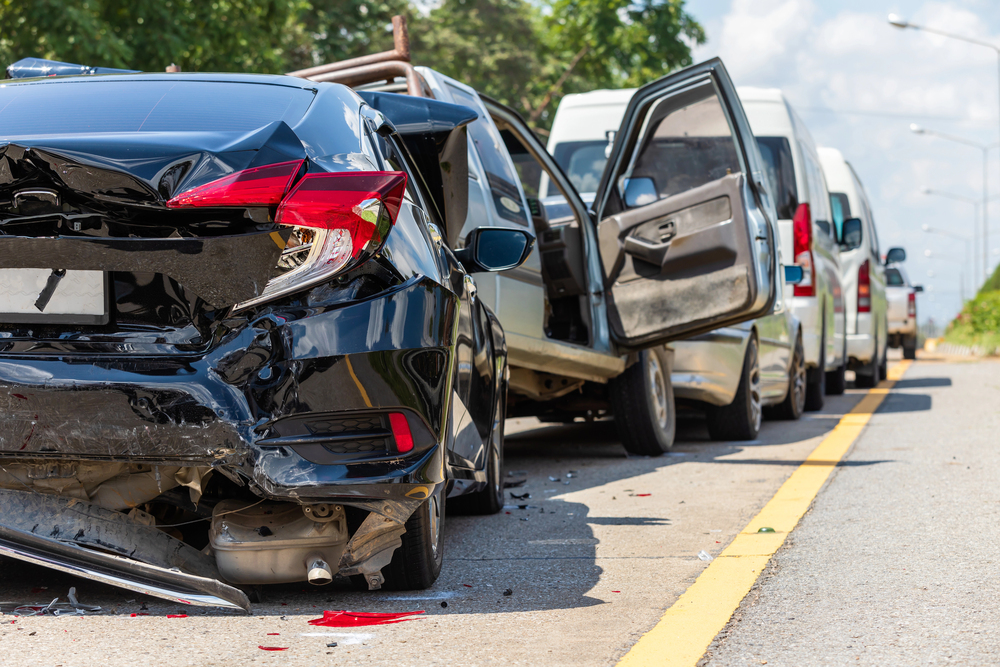
On Behalf of Adler Law Group, LLC The summer solstice, the day with the longest daylight hours of the year, passed over a month ago. This means that it is starting to get dark earlier in the evening. Regardless of the time of year, driving in the dark carries certain risks that drivers can largely avoid during the daytime. If you drive a lot after dark, you may be at an increased risk of getting into an accident on the road. Why does night driving increase the risk of a motor vehicle accident in Connecticut? Reduced visibility Even though cars have headlights and many highways have lights illuminating the path, night driving still comes with reduced visibility. This means drivers have less time to react if something like a deer crosses in front of them. Frequency of drowsy drivers The nighttime sees a higher incidence of people who are driving drowsy, which can be just as dangerous as driving under the influence of drugs or alcohol. While the only thing you can do about other drivers is to drive defensively, pull off someplace safe to rest if you find yourself getting sleepy behind the wheel. Increased glare Looking at the glare from another car’s headlights can temporarily make it difficult for another driver to see. Glare is a problem unique to night driving as this is when headlights are generally in use. Being aware of the risks of night driving helps you be a safer and more defensive driver, reducing the chances of getting into an accident.

How can drowsy driving lead to unexpected accidents?

On Behalf of Adler Law Group, LLC As you try to change lanes and continue your journey on the road, your eyes may drift over to the drivers around you. One issue that you may notice that is becoming more common is people falling asleep behind the wheel. It is important to notice the signs of drowsy driving, especially if you are on a highway or other crowded area. Ignoring the warnings According to the Centers for Disease Control and Prevention, driving over the rumble strips on the side of the road that warn drivers of a long drop is dangerous. When a driver continually ignores or accidentally drifts over them, it could be a sign they are asleep. This excessive sleepiness from a long shift or an unsafe medication can leave a driver struggling to remember the last few miles of road. They may make dangerous mistakes when startled awake, such as wildly turning the wheel or slamming the brakes without warning. Failing to recognize danger A driver who is falling asleep may not pay attention to signs or stop lights around them. Whether they are too unfocused to process these signs or they are simply not reacting fast enough, a crash can happen when one person fails to stop in time. Going over the speed limit When a person is traveling for a long time on a highway, it can feel easy to accelerate without realizing it. This means that someone used to not turning or slowing down can lose control of their vehicle while on a lengthy stretch of road. Noticing these signs of people around you can help you if you worry about crashes caused by a drowsy driver.